Arduino Kit For Gcse Computer Science Uk
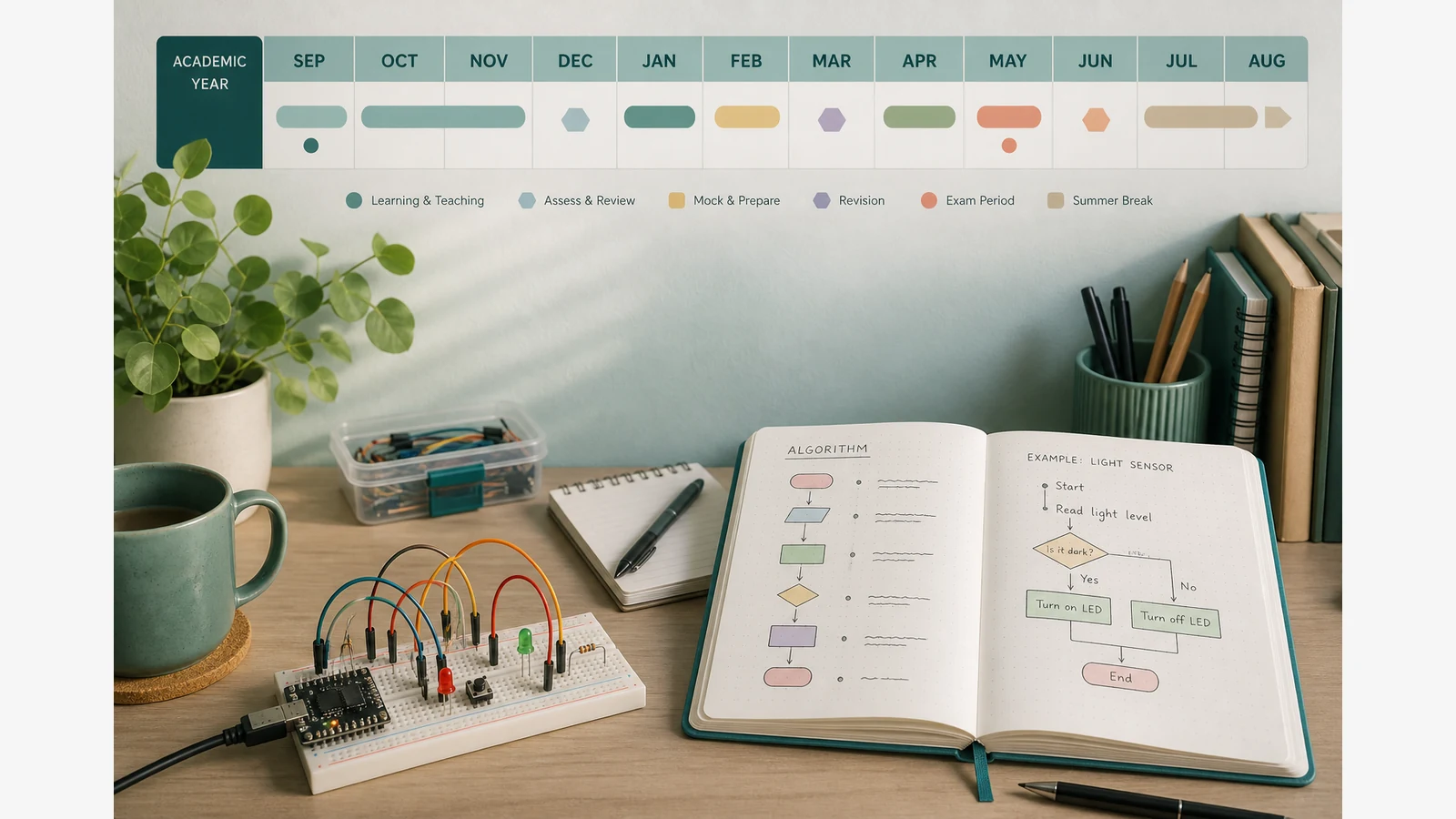
An Arduino starter kit can reinforce GCSE Computer Science ideas—computational thinking, programming techniques, testing and debugging—through physical input–process–output projects. It is not a syllabus substitute, an exam-board approval badge, or a guaranteed grade tool.
UK education-oriented writeups map Arduino-style hardware work to those skill areas, and parent guides often place Arduino after micro:bit foundations when learners want deeper electronics. Separate KS3 modular programmes exist with their own curriculum-alignment claims for educators; treat those as third-party education products, not as proof that any retail kit is NEA-compliant.
A practical UK term plan
| Term window | Kit focus | Skills practised |
|---|---|---|
| Early term | LED and button labs, reliable IDE upload | Decomposition, sequencing, basic testing |
| Mid term | Sensors and simple actuators on a breadboard | Selection/iteration, input–process–output |
| Later practice windows | Short multi-component mini-projects | Debugging, evaluation, documentation habits |
Keep projects small enough to finish. Hardware that never reaches a working demo teaches frustration more than computer science.
Classroom vs home use
- Home: one reusable kit is enough if an adult can help with first uploads.
- Classroom / club: identical contents, storage and teacher prep time matter as much as the board itself.
- Budget reality: buying fewer complete kits that actually get used beats incomplete class sets.
Who should choose a different path first
Learners who still need block-based confidence before text-based sketches should stay longer on micro:bit-style tools. Families choosing between platforms can read micro:bit vs Arduino for UK kids. For first-evening setup, use install Arduino IDE and upload Blink, then verify kit completeness with the contents checklist.